Search
HOURS, NEWS & CALENDAR

Crested Butte Tasting Room: Open Daily 11am-Last Call at 8:30pm serving rum cocktails, appetizers, and offering bottles and merchandise for sale.
UPCOMING MUSIC IN FEB & MARCH 2012!

Silverton Tasting Room: 1309 Greene Street! Check it out. 

Distillery Tours in CB: By Appointment until 4/2012. Call us!

Check our Facebook page or our Blog Link for more calendar info.  We now have distribution of Montanya Rums in 30 states, and we anticipate being available in all 50 in 2012/2013.  

RECIPE OF THE WEEK

The Kiwi Experience

In a shaker with ice, blend and shake:
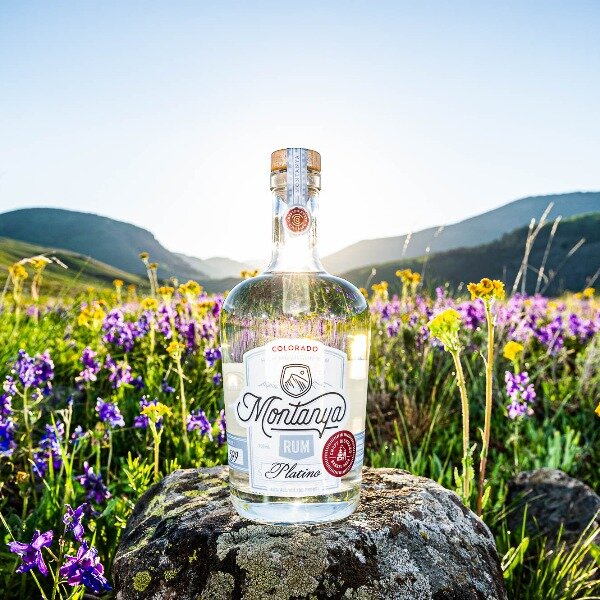
3 oz. of Montanya Platino
(or 1.5 oz. Montanya Platino and 1.5 oz. Cucumber-infusion)
1.5 oz. Kiwi Pineapple Mix
juice of half a lemon (or lime ok too)
1 oz. simple syrup (more or less to taste)

Shake and strain into martini-style glass.
Garnish with a floating kiwi slice. 

Kiwi Pineapple mix:
2/3 fresh kiwi
1/3 fresh pineapple
Blend and strain as juice. 
Keeps in fridge for one week if 1 oz. lemon juice is added. 

Simple syrup:
1:1 ratio water to natural sugar
heat to dissolve and chill.  

READ OUR BLOG

Hello Friends! 
Keep in touch with Montanya Distillers by checking out our blog posts. Click HERE!

WHY ON EARTH WOULD WE CHOOSE TO MAKE RUM IN COLORADO??? 

Many people associate rum with the Caribbean, but that's only a little bit of rum's story. Distillers have been making exceptional rum in the mountains for hundreds of years. 

There are some compelling reasons why making rum in the mountains of Colorado just makes plain good sense.    
    
Here are just a few:

  • The main ingredient in rum, comprising 85% of the fermented wash and 60% of the final bottled product, is water.  Rum comes out of the still at about 140 proof and is blended with water to be bottled at 80 proof.  Here in Crested Butte, our water is crisp, clean snowmelt and spring water that charges an aquifer 350 feet below Crested Butte.  This water percolates through flavorful minerals that give the water source a perfect pH for bottling.  Rum producers in other parts of the world struggle to find water that is not scarce on their islands. We are thankful for our plentiful source.  

  • The finest rums in the world are aged at altitude.  It's true - we didn't make this up for our marketing campaign.  In Guatemala at the Ron Zacapa distillery, barrels are carried up into the mountains to age because the temperature fluctuations from day to night force more rum into and out of the barrel's oak pores.  The crazy magic of the oak makes the rum more smooth and delicious.  It is true that Guatemala has some nice mountains.  But the mountains above Crested Butte are pretty hard to beat.  

Rum is traditionally aged in American Oak casks.  Caribbean and Central American rum producers import their barrels from whiskey makers in the US.  We are actually closer to the source!  Our barrels reach us fresh from the Whiskey distillery.  A fresher barrel ages tastier rum.     

  • Rum fermentation attracts fruit flies (and yes, even bats) en masse to the tank, and the good news is...Crested Butte just doesn't have any of those because of our cool temperatures and high elevation.  We don't think they added any good flavors anyway.   
  • Making rum produces a lot of heat.  Ever seen photos of Caribbean distillers working over a hot still in a full sweat?  They chill their wash during fermentation to keep the yeast from dying.  In our distillery, the temperatures are ideal for fermentation.  
  • On a chilly winter day, the heat from our still keeps the building in the high 60s, a fine temperature for fermentation and comfortable visitors.   What better idea for a business in a chilly climate than one that produces heat as its main by-product?  
  • Crested Butte's miners have been drinking rum for 120 years, and we think they should have a source closer to home!

  • Rum's connection to slavery is one aspect of its history that we are thankful to distance ourselves from (as far as possible!)  Island nations became the first big rum producers because rum was a stable currency in the slave trade.  Back then, rum production was carried out on the backs of slaves because harvesting sugar cane was terribly labor intensive.   We are proud that our pure sugar cane, with its high molasses content, is American-grown and harvested by members of the United Sugar Harvester's Union.  

  • We do, however, support the idea of rum as local currency.  We hope our bookkeeping will continue to be in order, even if we pay for services with a bottle now and then... :)